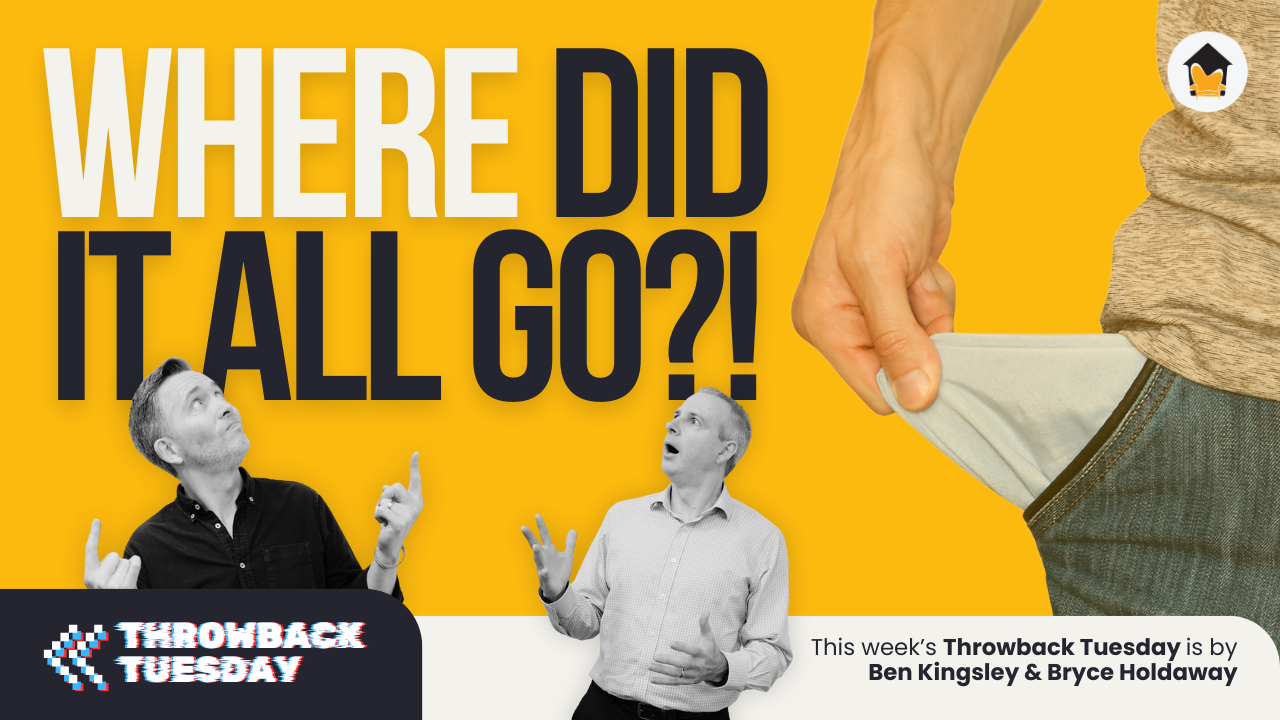
This snippet is from one of our previous episodes: Chat with NRL Star Matt Srama.
What happens when the life you planned… suddenly isn’t?
In this powerful throwback moment, Bryce chats with former NRL player Matt Srama, who opens up about the identity crisis that came with an unexpected early retirement — and the mindset shift that helped him find clarity on the other side.
As Matt shares, many people carry a blueprint for life: a story we write in our heads about how things are supposed to unfold. For athletes, this often includes a fixed timeline: the team, the accolades, the final game. But when that story is disrupted, whether through injury, rejection, or circumstance, it can feel like everything unravels.
But as Matt reflects… that disruption isn’t the end. In fact, it can be the beginning of something much more meaningful.
💬 “You’ve got the pen; you can write the next part of the story.”
If you’ve ever faced a curveball (whether it’s a job loss, relationship breakdown, or career pivot), Matt’s story offers a timely reminder that you’re not stuck. You’re just holding the pen again.
Ready to Rewrite Your Story?
If this episode sparked something in you (maybe an “aha” moment about taking control of your financial future), now could be the perfect time to speak to one of our property investment advisors.
They can help you map out a personalised Property Portfolio Plan.
A Property Portfolio Plan isn’t just about buying properties. It’s about creating a plan that supports the life you actually want to live.
__________________
If You Enjoyed TPC Gold | What to Do When Life Doesn’t Go to Plan, You Might Also Like:
- Ep 224 | Turia Pitt – From Burned Alive to Investing in Grit, Triumph and Property
- Ep 323 | Rising from a Decade of Addiction: The Phenomenal Property Investment Story You Have to Hear to Believe
- Ep 395 | Darius Boyd: How this NRL Star Found Financial and Mental Peace
Transcript
Matt Srama
As you’re talking through that, Jaemin, it just brought up my own experience and things I’ve learnt as well about story. It correlates so much with identity and who you are. As I said, I’ve listened to something from Tony Robbins about the whole blueprint of your story. For me, it was a massive penny drop. They used an example, and for my example, it correlated so much to me is (that) from a young age, you’ve got this story in your head. It’s your blueprint of life, basically. It’s mapped out.
“I’ve got this and I want to do this by 18… play Queensland Cup.” And for athletes, we tag it a lot with goals like that. “I want to make Q Cup, reserve grade by this age. I want to be Player of the Year by this age, blah, blah, blah. Tick, tick, contract, full time.” This is all my blueprint of my dream of being an NRL player and a star. And an injury might come; you might get dropped or you might have to move overseas and that wasn’t part of the blueprint. Especially for me that I had aspirations of wanting to play Origin or winning a grand final for the Gold Coast or playing till I was 35 and have an illustrious career. That didn’t go to plan. So you feel that sense of “that wasn’t my blueprint” and that’s where you feel that emptiness I think, and why so many athletes get lost. It’s that the blueprint has suddenly gone off track.
Tony Robbins says it well and guys like Jaemin, it’s (about) rewriting that story, reflecting back on that blueprint… and you can either change yourself, change your story or sort of blame others and most of society. Whether it’s being an athlete or people in general, (we) like to blame. And then we’ll just be stuck in that space. And I feel that for athletes where it didn’t go to plan, or got a career ending injury… it’s “poor me”. “Why me?” All of that. And then you put that tag, but it’s like, hold on, you can scribble that and use it to grow and rewrite the whole story. So use that injury… that door’s closed, that chapter in your story is done. It’s so exciting that you’ve actually got the pen and you can write the next story and the next part.
Bryce Holdaway
Were you able to do that at the time? Like obviously you’ve been exposed to frameworks and it’s something that’s part of your belief system now; but can you take us to the time you were 26… seen the doctor over the period of a year and then finally said it’s not gonna happen? What happened in the preceding days, weeks, months around that? And clearly you’re a balanced human being. I’ve spent some time with you, so you’re not necessarily dining out on that, but I’m sure there were some days…
Matt Srama
Yeah for sure and the thing is not many people like to talk about that as an athlete when the R word (retirement) comes along but definitely for me knowing that the blueprint is not going to go the way it is… It’s sort of like: okay I can stay stuck in the space of “why me” and “why injury” and things like that. But it can also be: okay this is an exciting opportunity now, where I get to spread my wings as a human and try differently. I had three different jobs. I just went bang and done a course in real estate and then did a bit of this and that.
It was more, as I said before, swapping that expectation for appreciation and realising that you’re in charge, you’re the author of your story and you can use what you had as a platform. And where I am at the moment, there’s so much more growth ahead but I feel as though I’m right where I need to be in terms of my job now. And it’s like, well, (it wouldn’t have happened) if I didn’t get injured and I wouldn’t have had this story to tell the younger kids coming through now. Far out. But that’s because I accepted the blueprint change. And that took probably 6 to 12 months of accepting. So many people would say to me: are you going to play again? Like, are you still fit? You should go.
Well, I’m happy with how it is. And that’s the common thing where guys retire. It’s like, oh, where are you going to play now? Like what local comp? And it’s like, you’re going to quit your identity as a footy player; it’s so exciting! That’s what I say to a lot of guys who are retiring. And I know they’re struggling, but it’s like, man, really enjoy it. It’s truly exciting once you, as Jaemin says, if you take the handbrake off and you accept that change is happening. Change is an inevitable part of life isn’t it, so you’ve got to accept it.