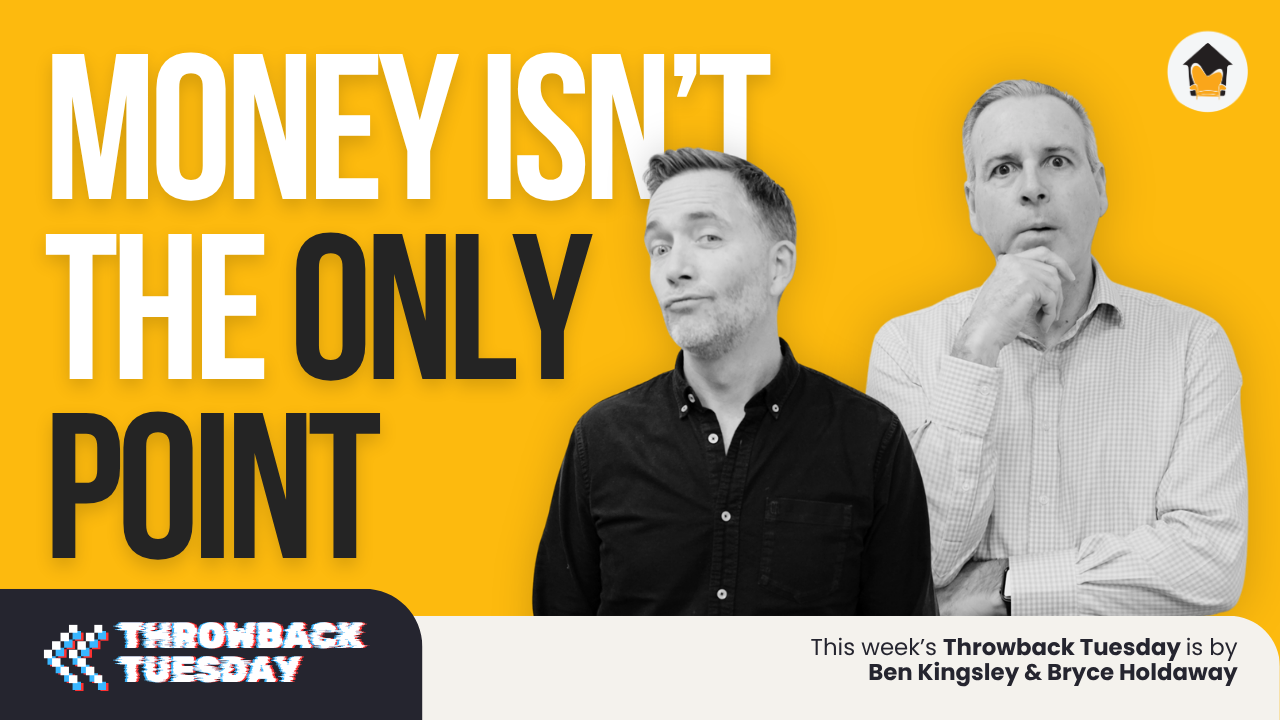
This snippet is from one of our previous episodes: Should You Change Investment Plans?
It’s a question we’re asked all the time… and one that rarely has a simple, one-size-fits-all answer.
In this TPC Gold bonus episode, Bryce and Ben break down the pros and cons of buying property through a trust versus in your personal name, and explain why it’s so important to understand the implications before you make your next move.
You’ll get a clear overview of the main trust structures — discretionary, unit and hybrid — and learn where asset protection and tax flexibility can genuinely make sense… and where these strategies often fall apart in practice. Think: losses being trapped, reduced lending options, and land tax thresholds kicking in much sooner.
You’ll also hear Bryce and Ben’s personal approach on this topic and why, for most investors, keeping things simple often leads to better long-term outcomes.
Feeling Confused About Your Structure?
If you’re unsure whether a trust, company or personal name is right for your situation, our Tax & Property Accounting team at Empower Wealth can help you make sense of it all.
They’ll work with you to understand your goals, weigh up the pros and cons, and ensure your setup supports your long-term strategy… not hinders it.
__________________
If You Enjoyed TPC Gold | Should You Buy Property in a Trust or Your Own Name? You Might Also Like:
- Ep 26 | Q&A – Property Through Trust & Renovating Established Properties
- Ep 434 | Unboxing Tax Structures and Myths – Chat with Julia Hartman
- Ep 567 | Trusts, SMSFs & “My Buyer’s Agent Said I Asked Too Many Questions!”
Transcript
Bryce Holdaway
All right, today is Q&A Day, Ben. I just want to give a little shout out to the ladies. I understand, Ben, that we might not be the most attractive podcast for the ladies. We just talk blokey stuff about football. I get it. But we do have a part of our audience that is female. And so I want to say to the ladies: In going through all the questions that I’ve seen on SpeakPipe, the majority of them are males. So a little shout out to the ladies, we wanna hear from you. And the ladies of our community wanna hear from you. We wanna know what your questions are. So please go to thepropertycouch.com.au and leave your message. And I promise you, I will prioritize that if they come through just so we can get some balance. But today’s first question is from Bea. And the question is regarding buying in a trust or in your own name. Let’s have a little listen to the question now.
Bea
Hi guys, it’s Bea here. We have a family trust set up with a few of our investment properties in them. We’ve recently gone to a buyer’s agent and they have mentioned that if it was them, they would forget about the family trust and buy in their own names to take advantage of the land tax threshold. Just wondering if you guys can please explain this further.
Bryce Holdaway
All right; that’s a good question from Bea. Thank you for that. Ben?
Ben Kingsley
Yeah, so obviously, I’m on record many, many a time to be talking about whether you would need to have different types of structures. And there are pros and cons with different types of structures. But for me, building out wealth in property in your individual names makes a lot of sense. But let’s start to think about what some of those types of structures that Bea was talking about in terms of trust structures.
So you’ve got a discretionary trust, which is usually the most common, often sometimes referred to as the family trust, that Bea was talking about there. You’ve got a unit trust, which might have, say, multiple owners and their ownership is relating to the units. And then a hybrid trust is a combination of the two. So a discretionary trust means it’s at the discretion of the trustee in terms of how the profits or revenues are distributed. A unit trust, it’s bound by the unit holders, and a hybrid is a combination of those two. Now from time to time, you’ll get some advocates who are pro all of these complex structures as to why you would do them. And I’ll always talk about asset protection; you know, if you ever get sued, (or) if someone hurts themselves in your property and so forth. But usually those people who are advocating for that are selling you the option to buy the trust through them.
So I’m not necessarily a big fan in terms of setting up in trust structures, but let’s quickly go through some of the benefits. There’s asset protection, there’s taxation flexibility. Again, from a discretionary nature point of view, you have beneficiaries. So you’ll have primary beneficiaries and secondary beneficiaries. If you’ve got a large family, you may be able to distribute that through, but this is where I’m also saying it’s not my expertise perfectly nor Bryce’s. So we’re always going to say: get tax advice on this.
We’re talking about statements of fact, but we also know what’s interesting even around discretionary trust where you may be allocating to different families… from that tax flexibility point of view, the ATO is actually saying back: did they actually receive that money? Cause obviously they have to then declare that income in their annual tax returns. So the ATO will continue to put pressure on these types of structures. And obviously the other benefit as we talk about this is estate planning. So usually with these types of trust structures, the people who have built this wealth through those structures, they’re looking at long-term management of that, even beyond the grave in some cases… in terms of the trustee gets to manage that on behalf of family members or what does that look like? So Bryce, those are some of the benefits I see. What about you?
Bryce Holdaway
Yeah, a couple of good ones there. So the estate planning one I like because it allows you to keep it through the bloodline. So you may have acquired a portfolio and then in the next generation, you want to make sure that it doesn’t go outside of the bloodline should there be a separation of a relationship. So that’s a good one. The asset protection is generally the reason in a lot of the cases that these vehicles get mooted. So think of yourself, if you’re a doctor or a lawyer and you get sued for some of the advice that you give, you want to be in a position where you have either put them into entities or don’t own anything so that you can protect yourself. So that’s largely in my experience where most of the sales pitch has gone towards why you buy property in a trust.
But some of the cons are, well, the losses get trapped within the trust. So if you’ve got negative gearing in your own name, you get to have the benefit of that. But if the losses are in the trust, you can’t distribute that through to you as an individual tax earner. So you can’t get the taxation benefits that are on offer for the negative gearing benefits. The land tax thresholds do drop. So that’s important. So you’ll start paying land tax sooner. In a lot of cases, lending becomes a challenge.
And so you can’t see this on a podcast, but my hands are really wide for the amount of lending options that you have in your own name. And then it narrows… like just think of a funnel narrowing, it narrows significantly within a trust. So if you can get the lending and you can get to the point where you’ve accumulated enough, and then you get to the pension phase, it’s great. Because then you get all the benefits of the discretionary features of being able to distribute the money as you see fit for the most tax effective environment. Also, when the properties are in the trust it’s often difficult to leverage the equity within the trust. If you wanted to buy it; say you changed strategy and you wanted to buy it in your own name, that becomes difficult. And then there are risks of legislative changes too Ben, which you could be at the mercy of.
Ben Kingsley
Yeah, which I think is a really good point to finish on here. And we’ve obviously got Julia Hartman, who’s our tax expert. And I mentioned in the Talking Property Tax (episode) that in the future, we’re going to do these types of trust models or what vehicles you can buy property in… and we’ll take a proper deeper dive with an expert. Because at the end of the day, we’re not experts in this area. We have a reasonable understanding given our experience of what we’ve been able to do.
But I do want to finish on that risk of legislative or ATO changes, right? So I can promise you that over the years that I’ve been doing this (25 years), I’ve watched many a presenter get up and speak about the pros and cons of all of these complex structures and these tax effective structures and all of these types. And I’ve just watched each time governments just starting to close what they call loopholes or, you know, people trying to minimise tax and take advantage of those types of things. So I can promise you that if you’re listening to this podcast in 2035, that I would have been tricked. That I suspect by that time, there’s a certain type of government who wants to see, you know, sort of everyone get carried to a certain destination would have changed the rules. And we only need to look currently at the Labor government in Queensland in terms of declaring that owning property in other states and the land tax thresholds are being wiped out because you own property in other states; that’s double taxation from that particular state government in Queensland.
So these are the types of things that are going to happen. So all I’m just saying to you… from my experience that if too many people use these types of vehicles for investing, they will close that channel and they’ll make it harder for you. And the other great example was with the discretionary trust and for the record, I have a discretionary trust. In the past, you were able to distribute that income through to children at around sort of $3,300 per child.
Bryce Holdaway
It’s $416 now, or is it $216?
Ben Kingsley
Something like that, and it’s not even worth it. Like the paperwork and everything that you’re paying to your accountant… it’s not even worth it to distribute it. So now you just heard, here we are telling you not to do it and Bryce and I both declaring that we have those structures.
Bryce Holdaway
We don’t have property in the trust.
Ben Kingsley
We have those for the business. We do not have, let’s repeat that… we do not have property in those trust structures. So it’s really important to understand that we are practicing what we preach. And that is that we have properties in our personal names or in that of our better halves. And same for me with Jane; in terms of most of the properties are in Jane’s name. So that’s an example of why, depending on, you know, what’s the agenda of the person giving you the advice… if it is an accountant, what are the merits of it? Because obviously these types of structures get a higher accounting fee year-on-year, because there is a lot of administration, there’s a lot of technical understanding you need to be aware of.
So I would always say for those first couple of properties that you’re buying, it does make a lot more sense generally speaking, unless you have risk of being sued or whatever in your professional career (as per) what Bryce mentioned, that you are better off to just stay in your individual names. And we can speak from experience for the vast majority of clients who work with our financial services business; I’m talking basically 98% of people buy in their personal names.
Bryce Holdaway
Yeah, so for for the record when I bought property before I met my wife Andrea, they’re in my name. And then since we’ve been together and married Ben, all of the purchases since have been in Andrea’s name. So therefore the discretionary trust is how I earn a business income. And so therefore, when we distribute income to Andrea and me, she generally is the higher taxable income earner because she has the properties. So therefore that is where the negative gearing happens. So business income in a trust, properties outside of the trust and asset protection for me is largely stacking purchases in Andrea’s name, because she isn’t in the, for lack of a better word, in the advice industry like you and I are.
Ben Kingsley
So seek advice. These aren’t recommendations.
Bryce Holdaway
Absolutely not.
Ben Kingsley
This is not personal advice. We’re talking very generally here. Go and talk to an accountant, but make sure that accountant has your best interests in mind in terms of not trying to over-structure you because it may be in their best interest to do so.